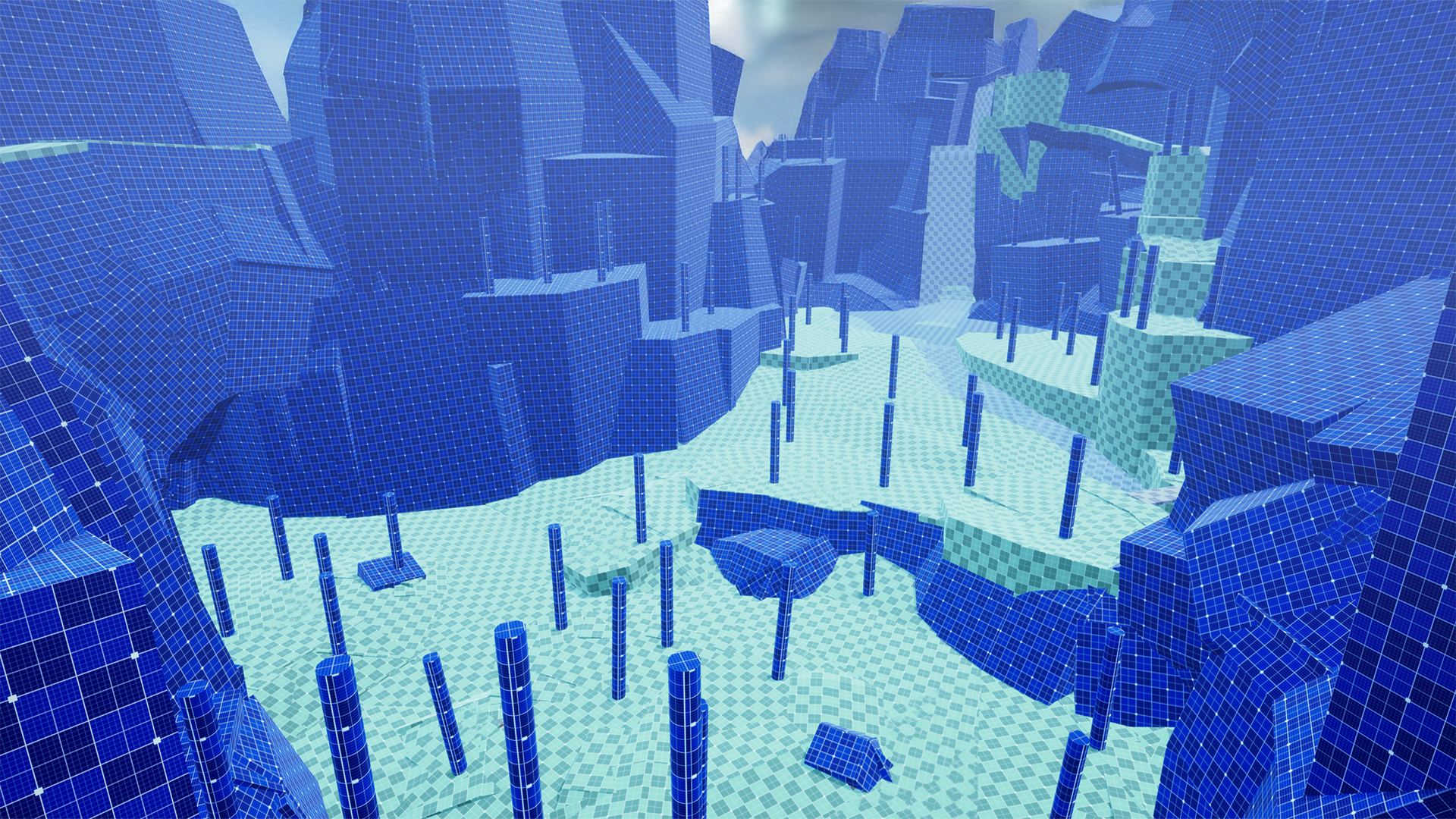
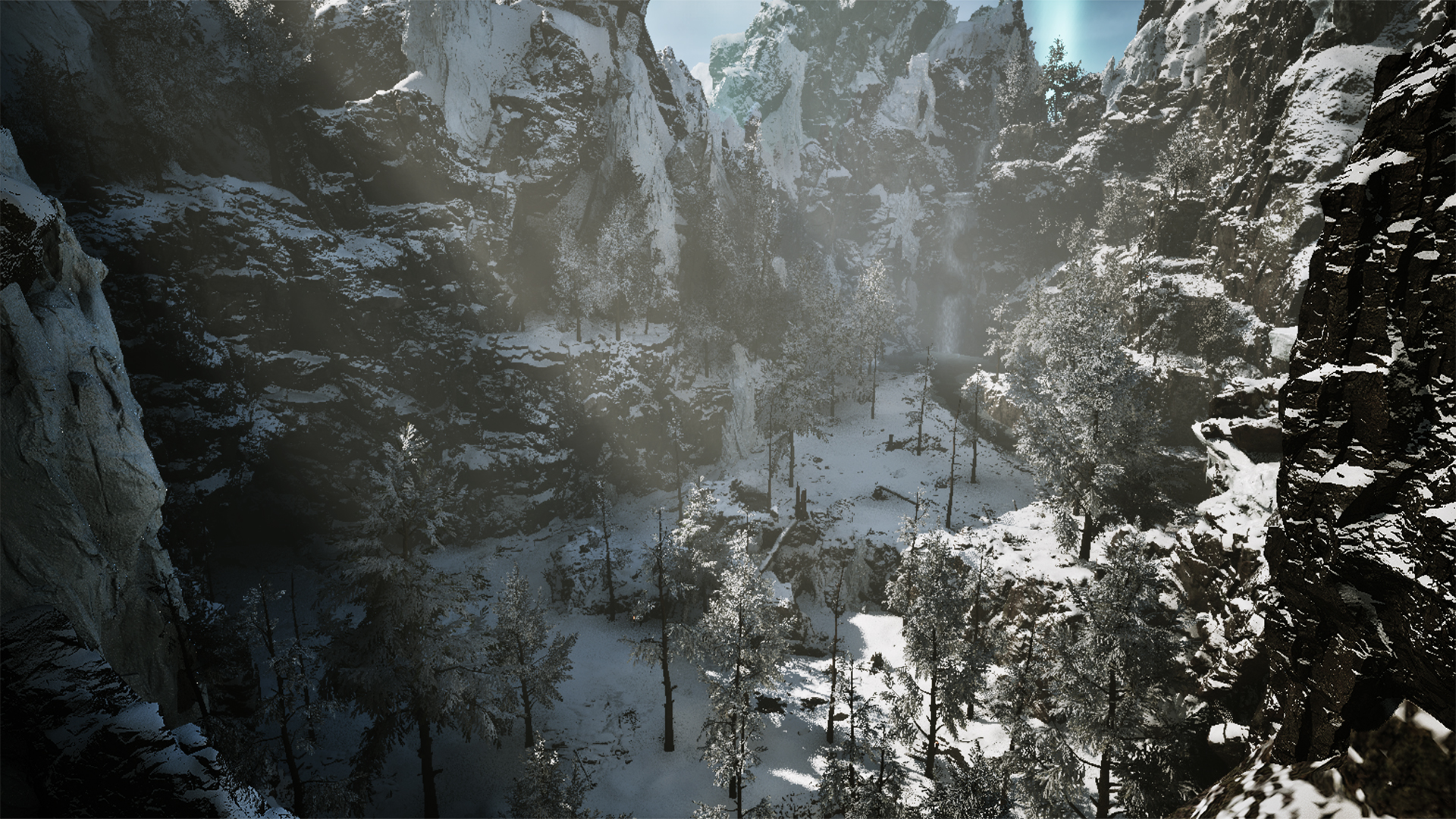
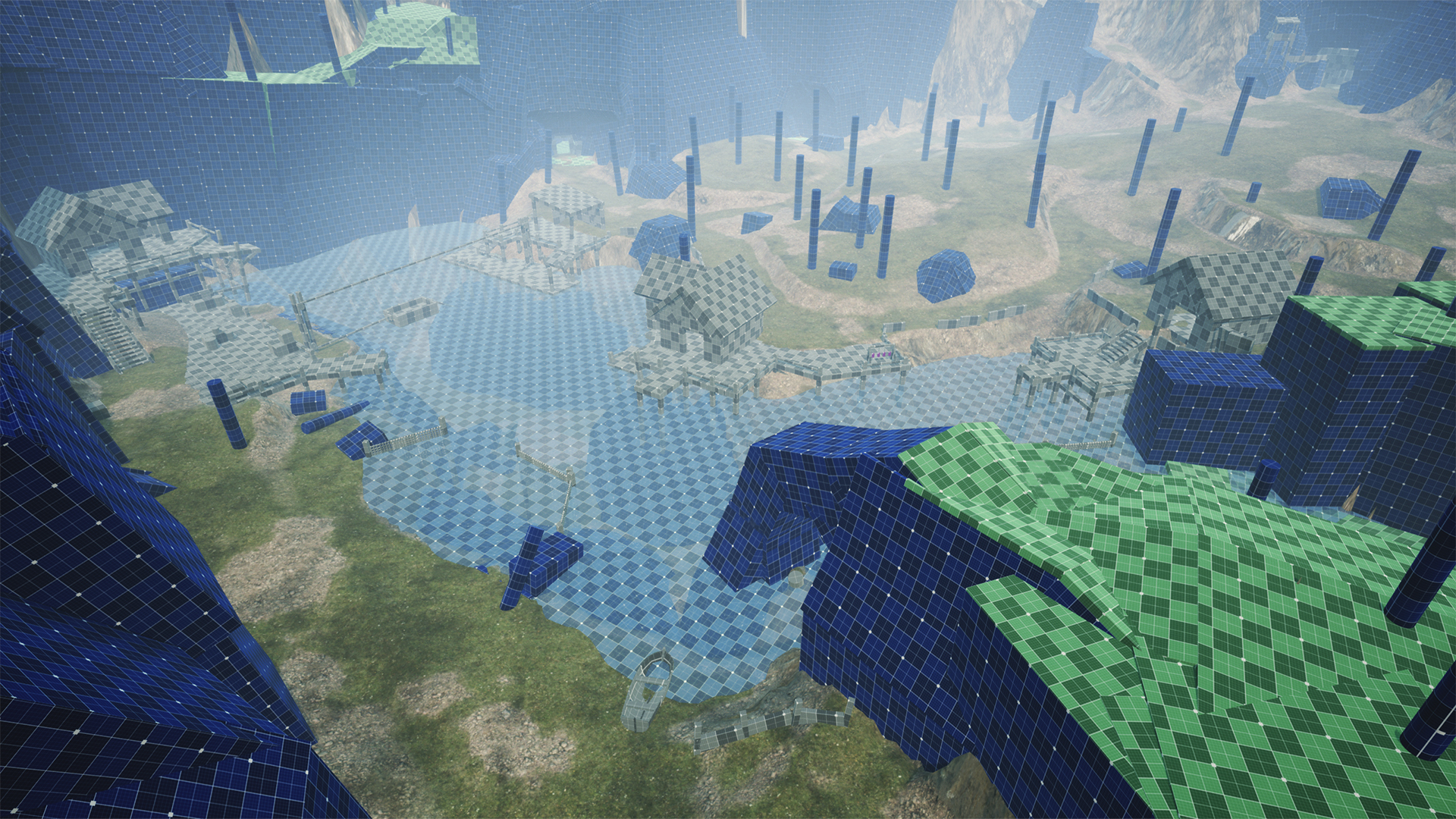
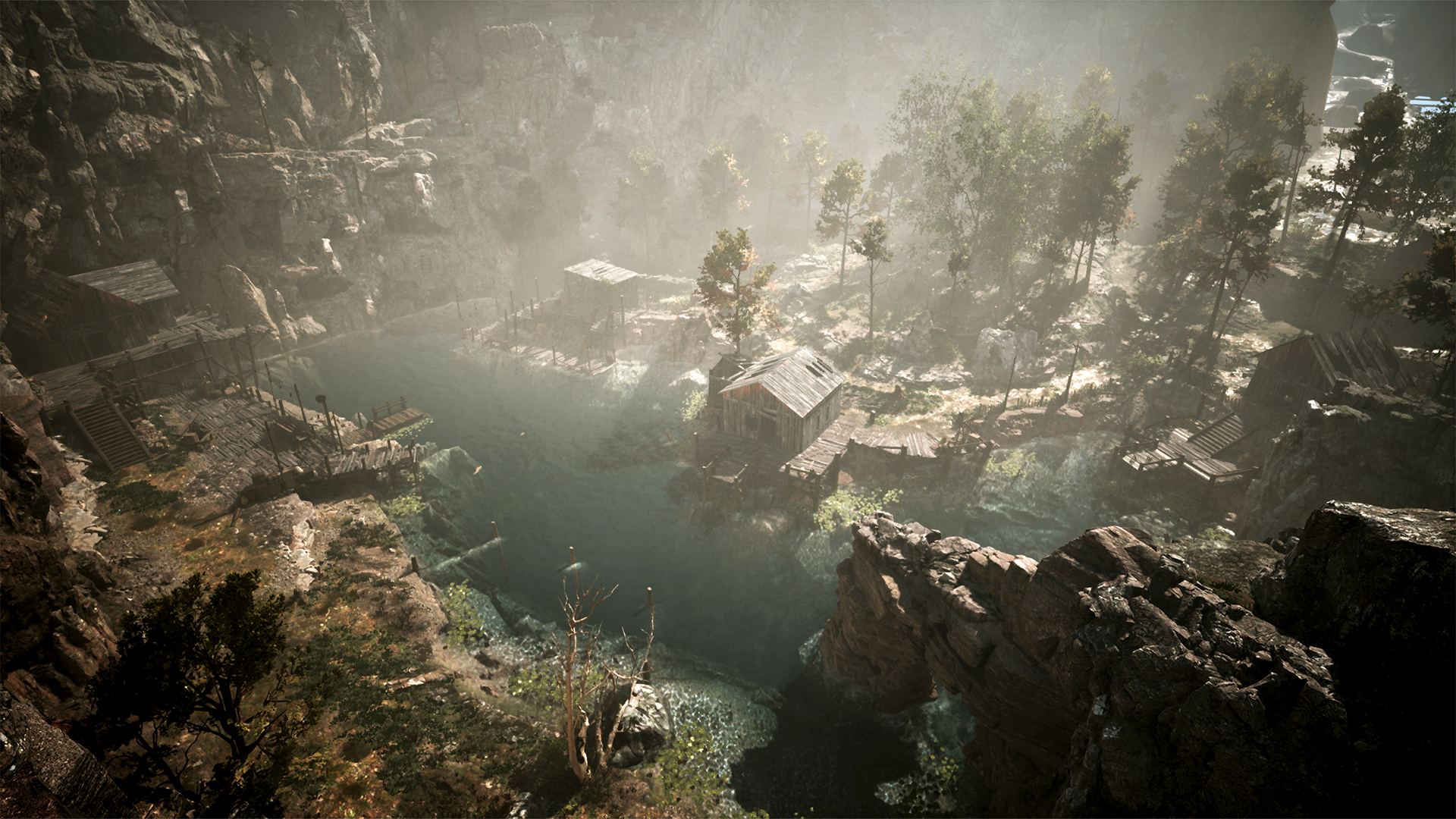
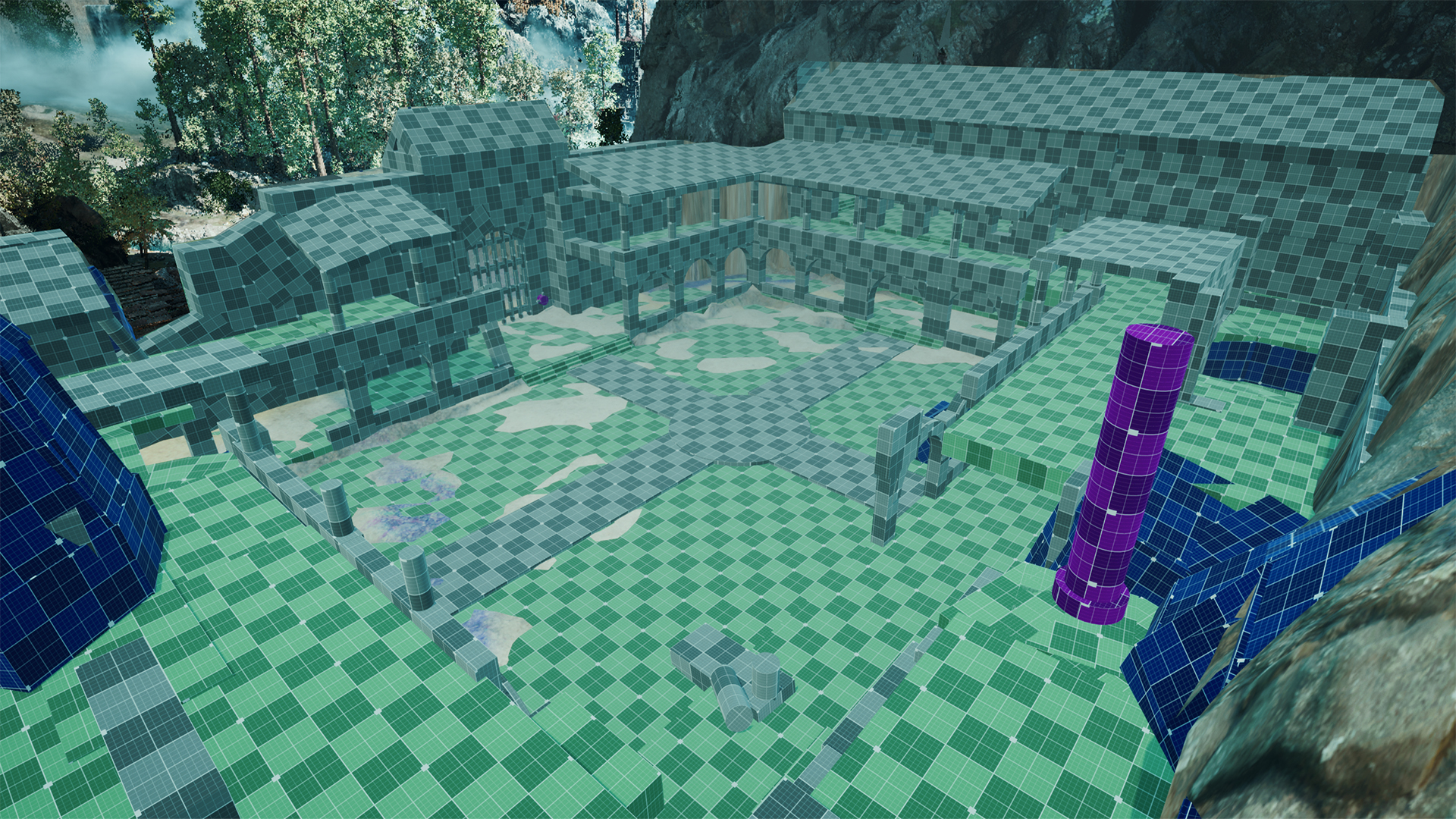
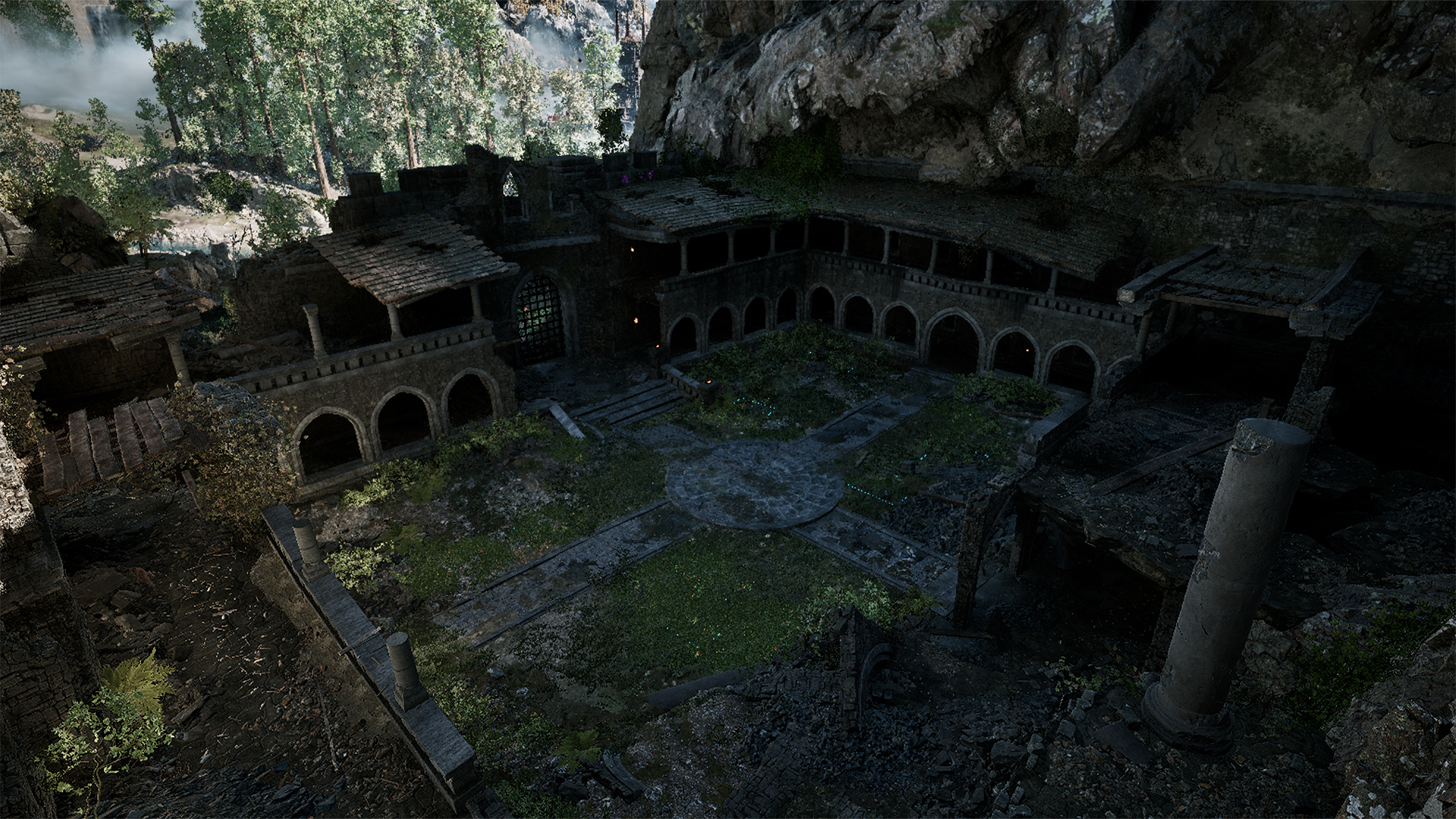
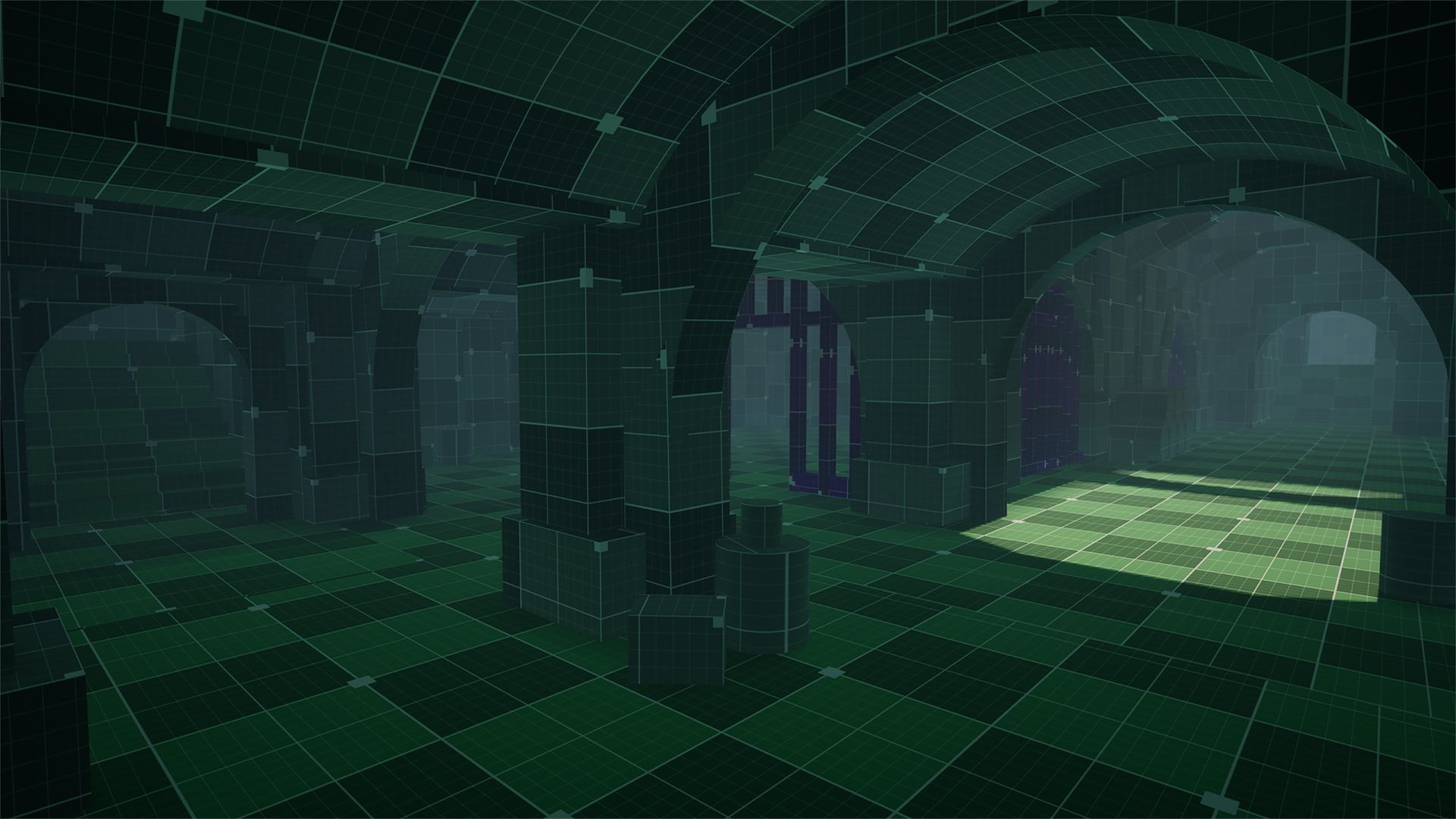
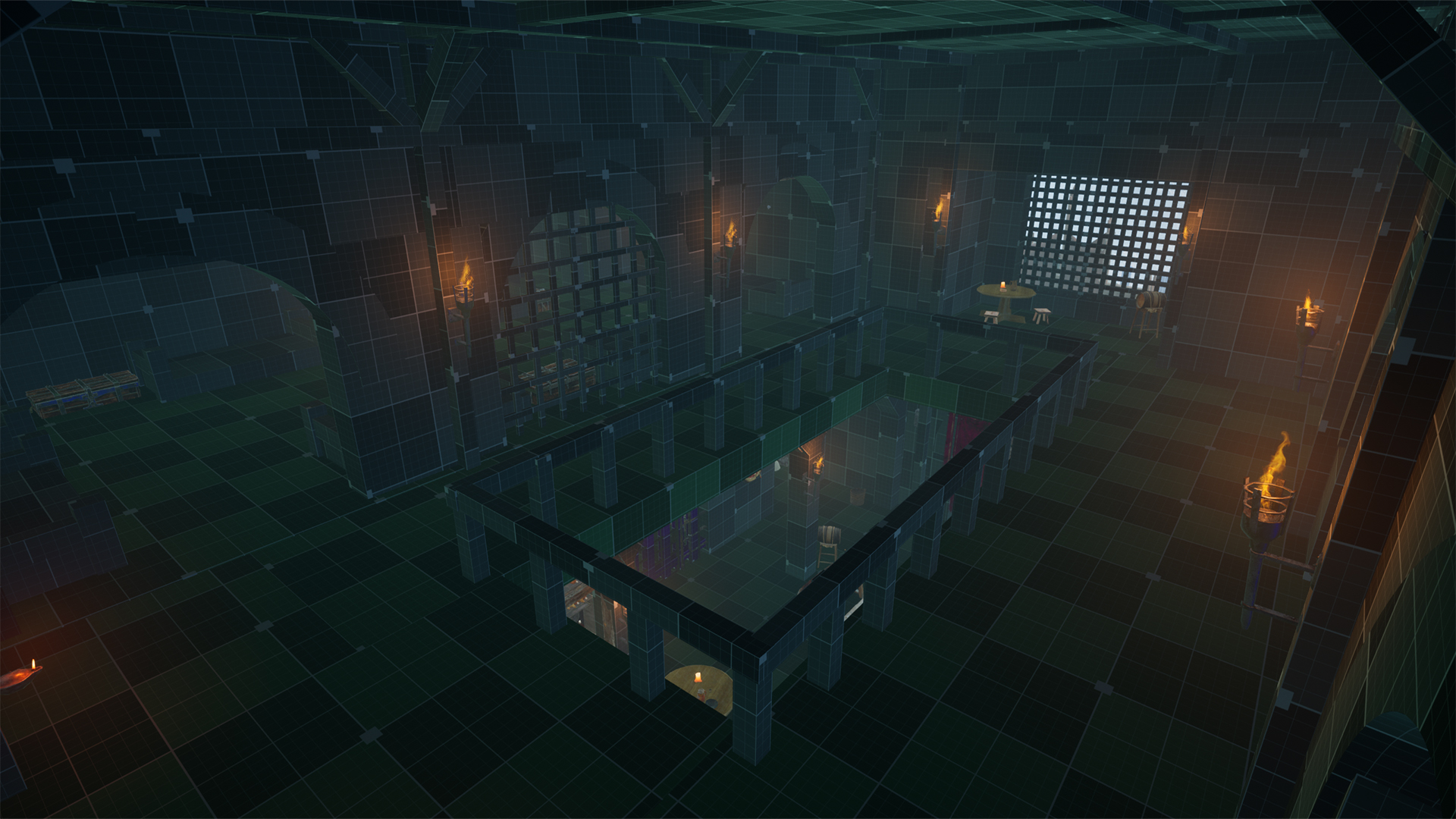
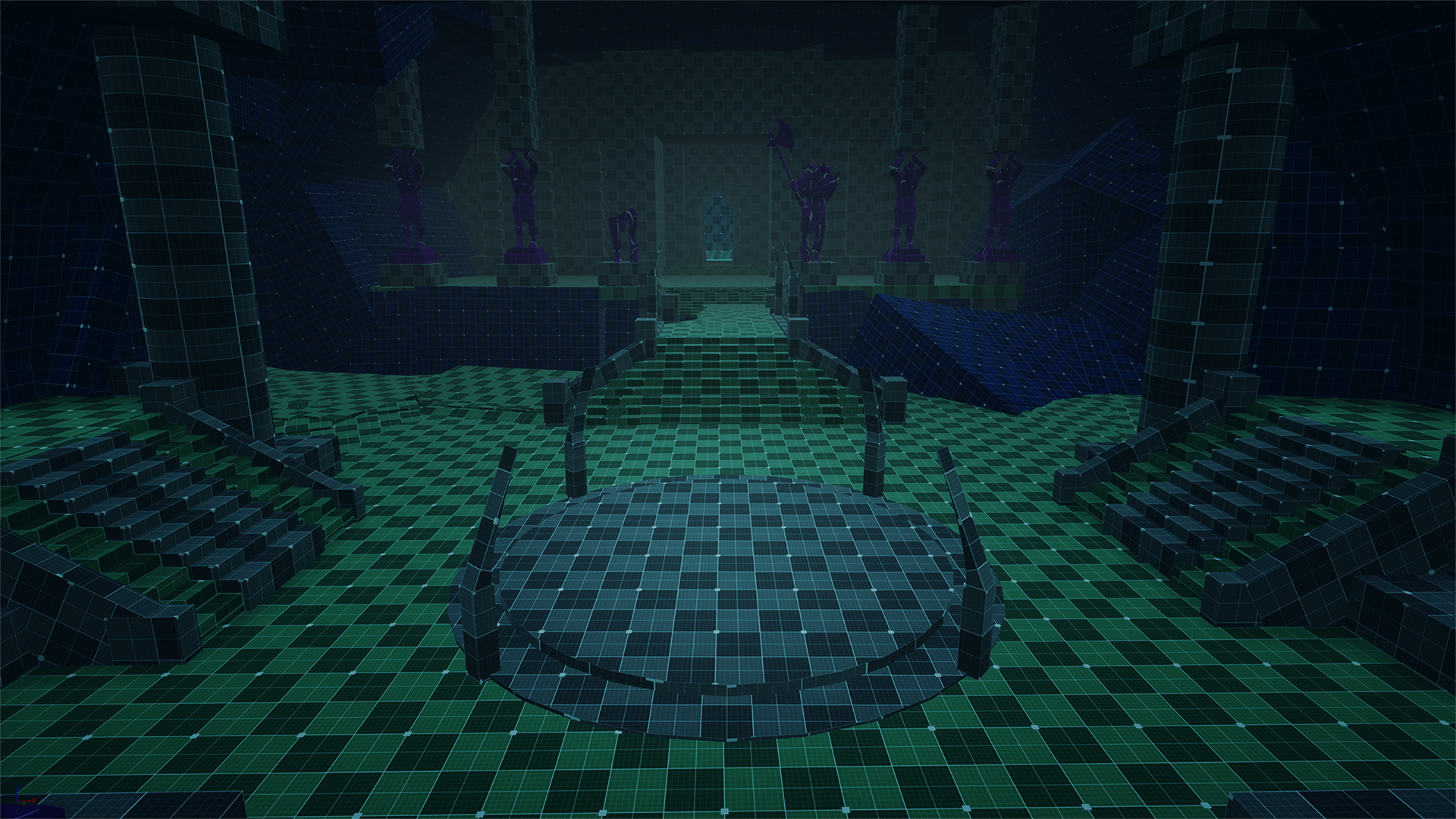
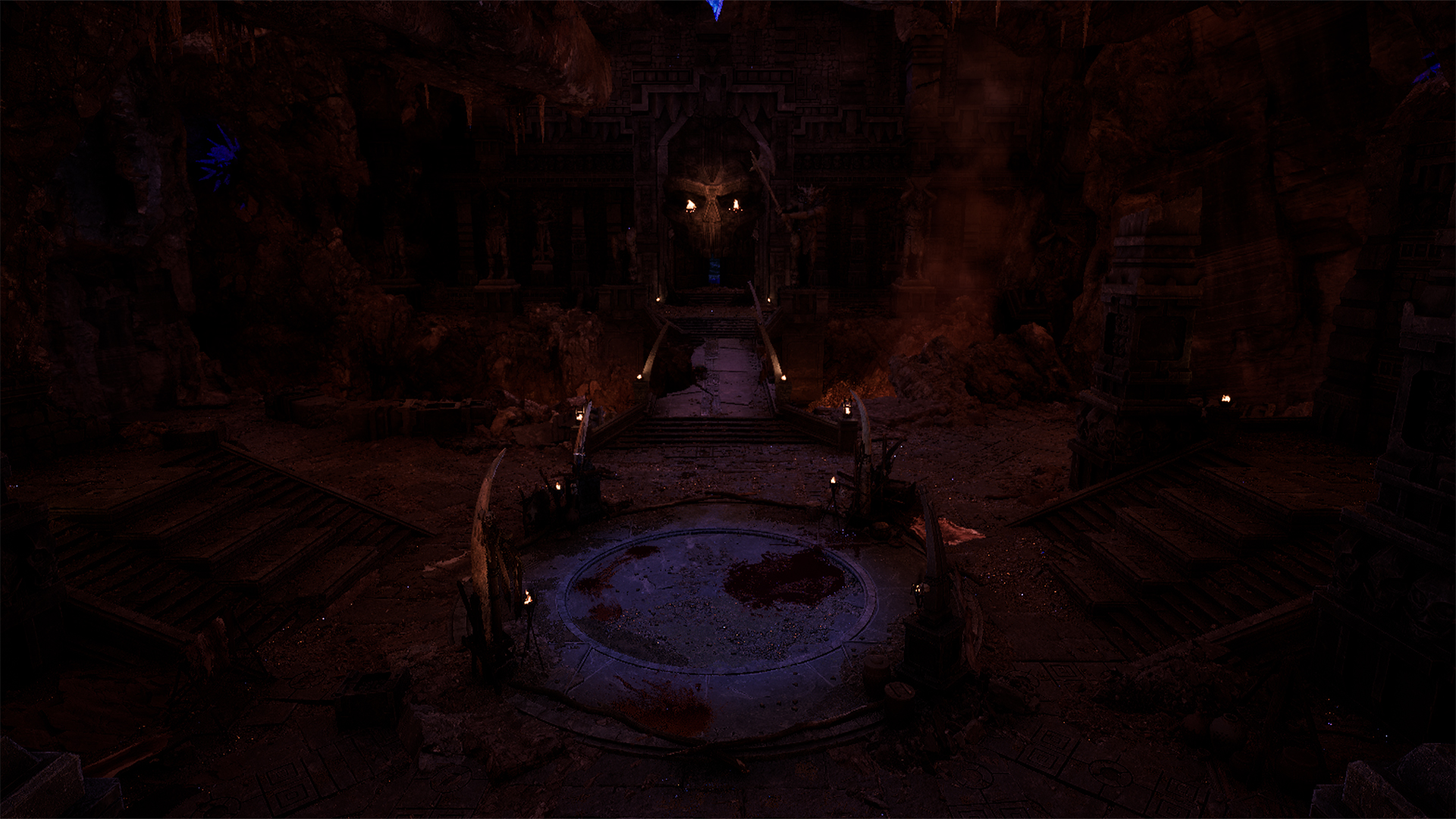
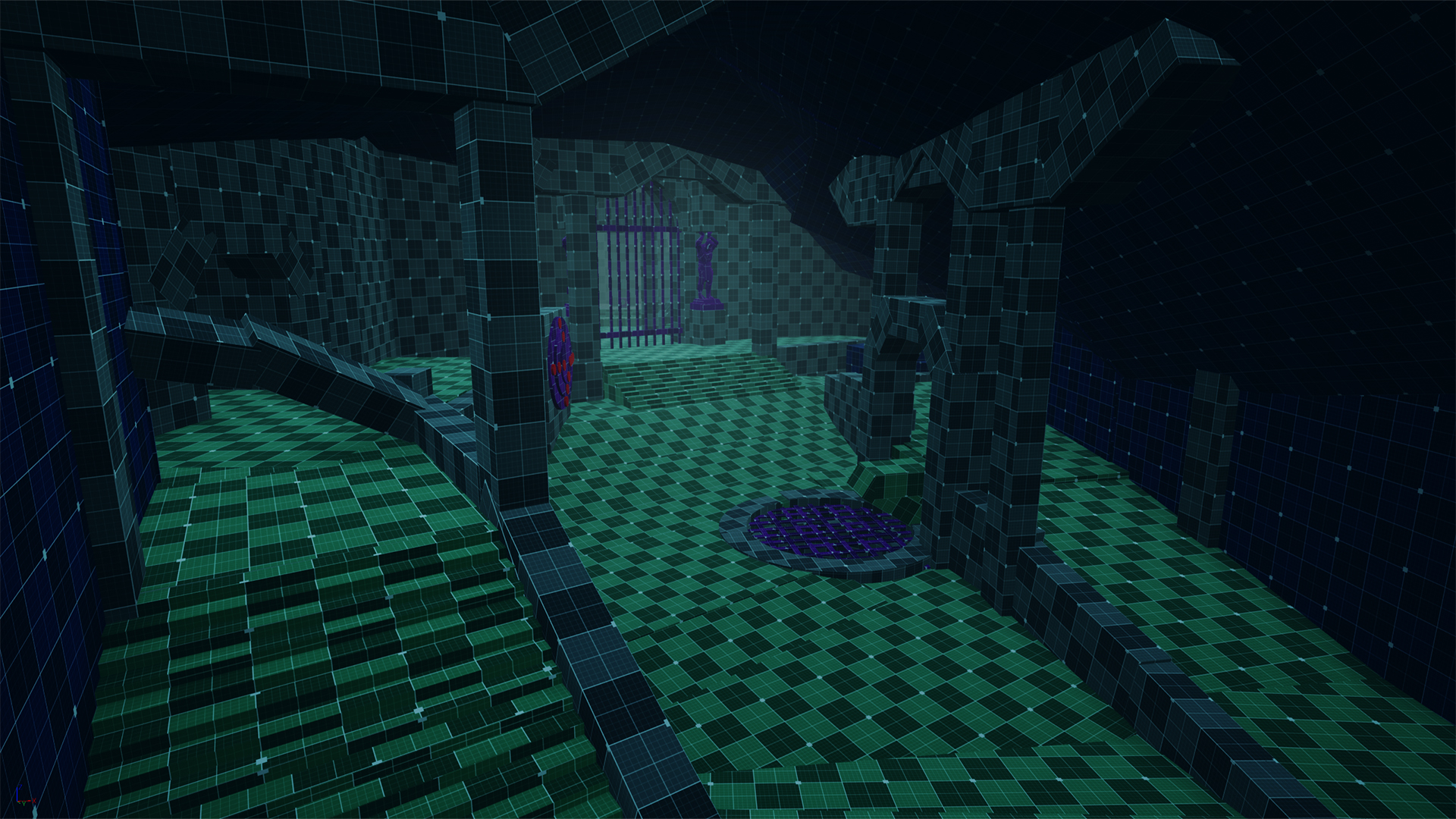
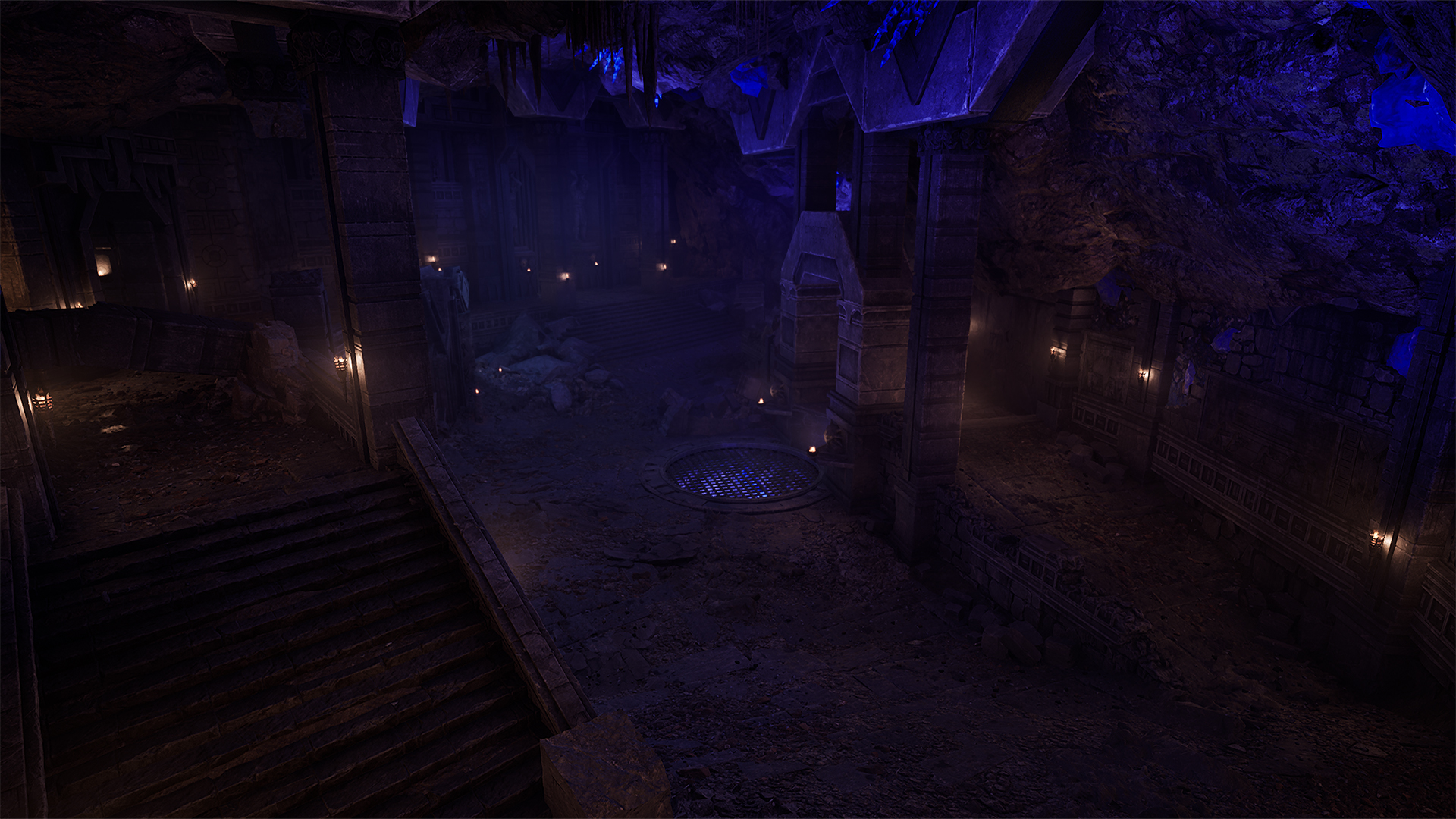
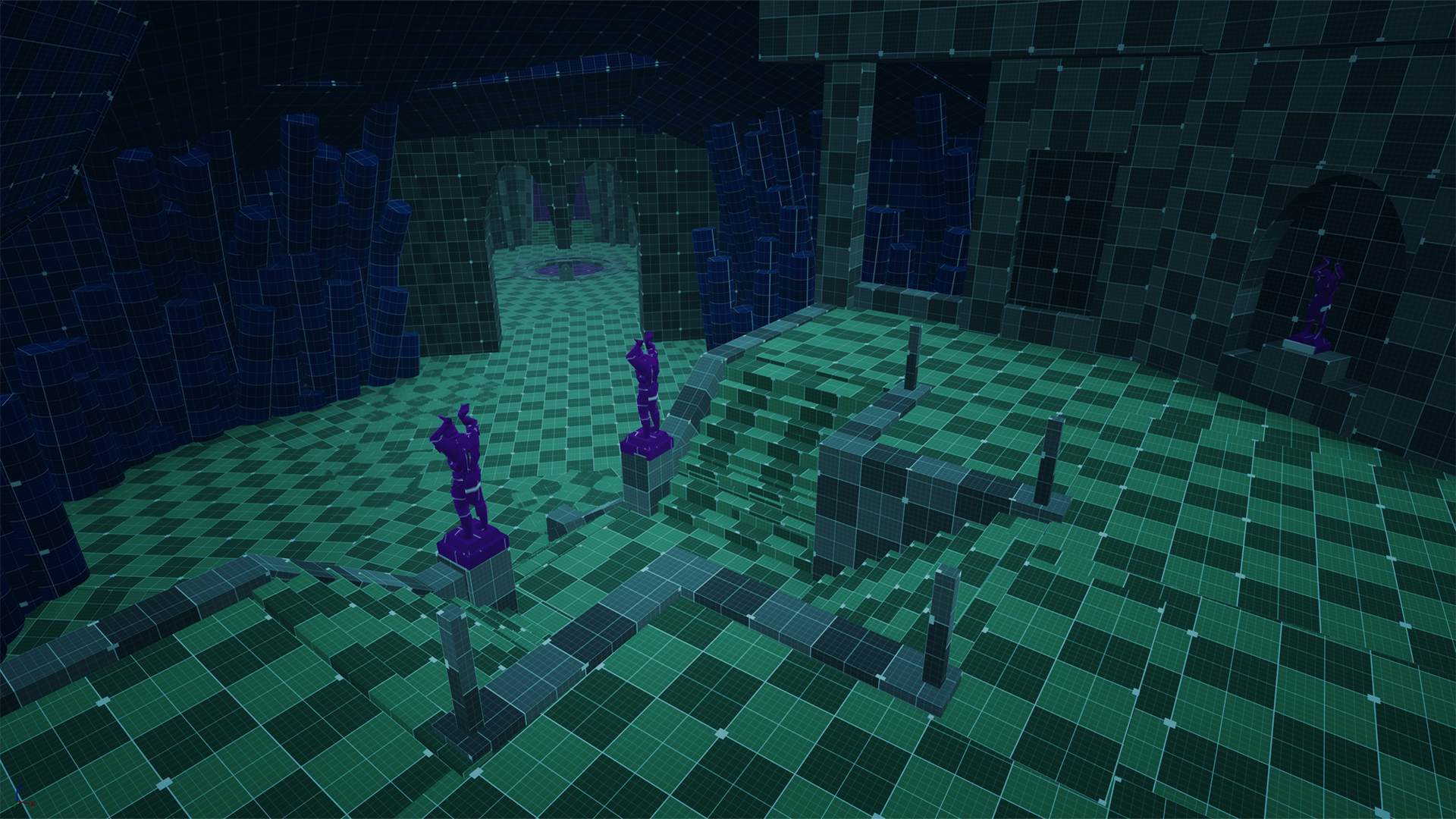
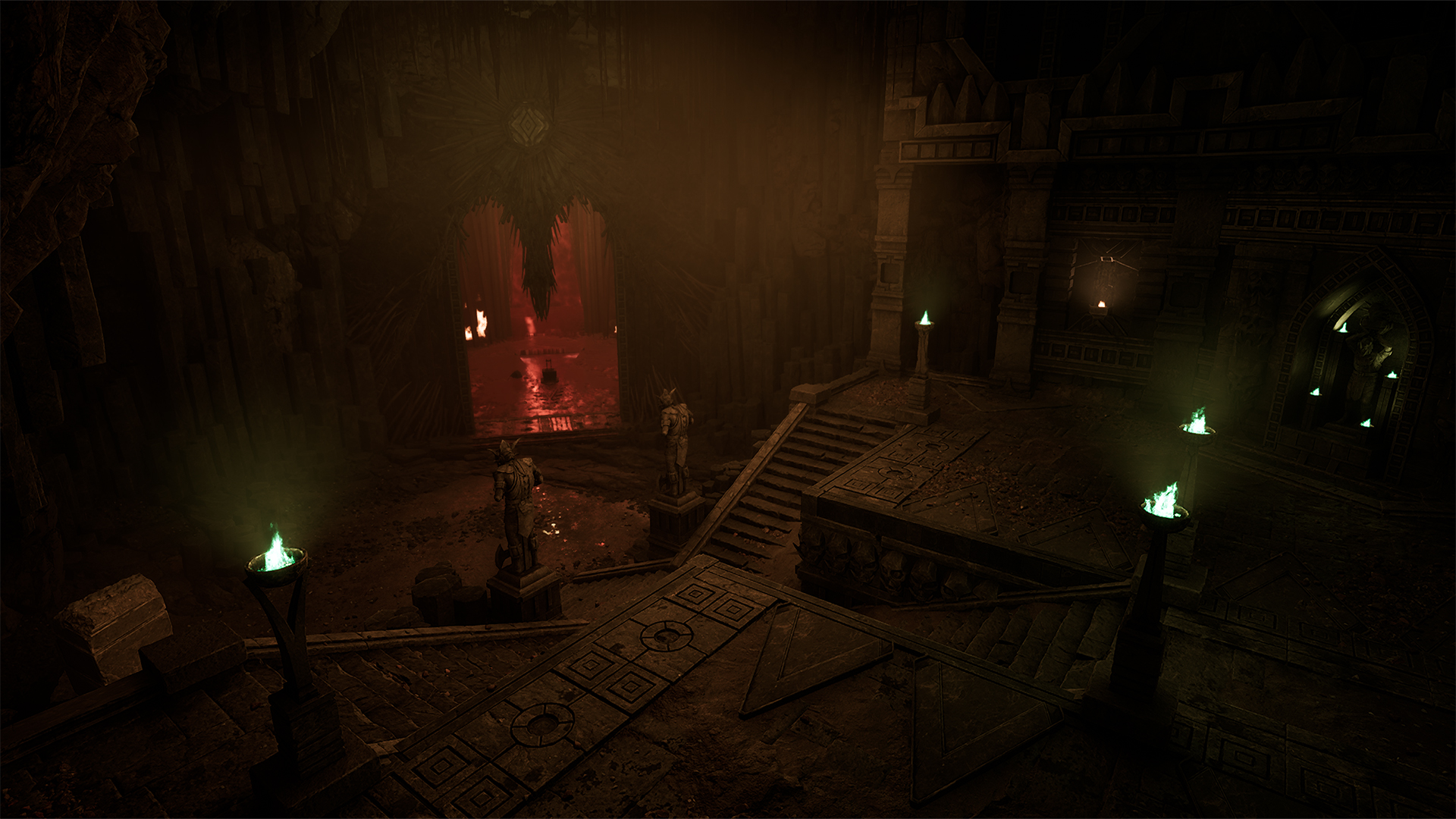
A selection of zones from across the Valley of Mines, chosen to show range across typologies — open world, interior, hub and dungeon. I worked on over 18 zones throughout the project; these highlight key design decisions and the blockout-to-final pipeline.
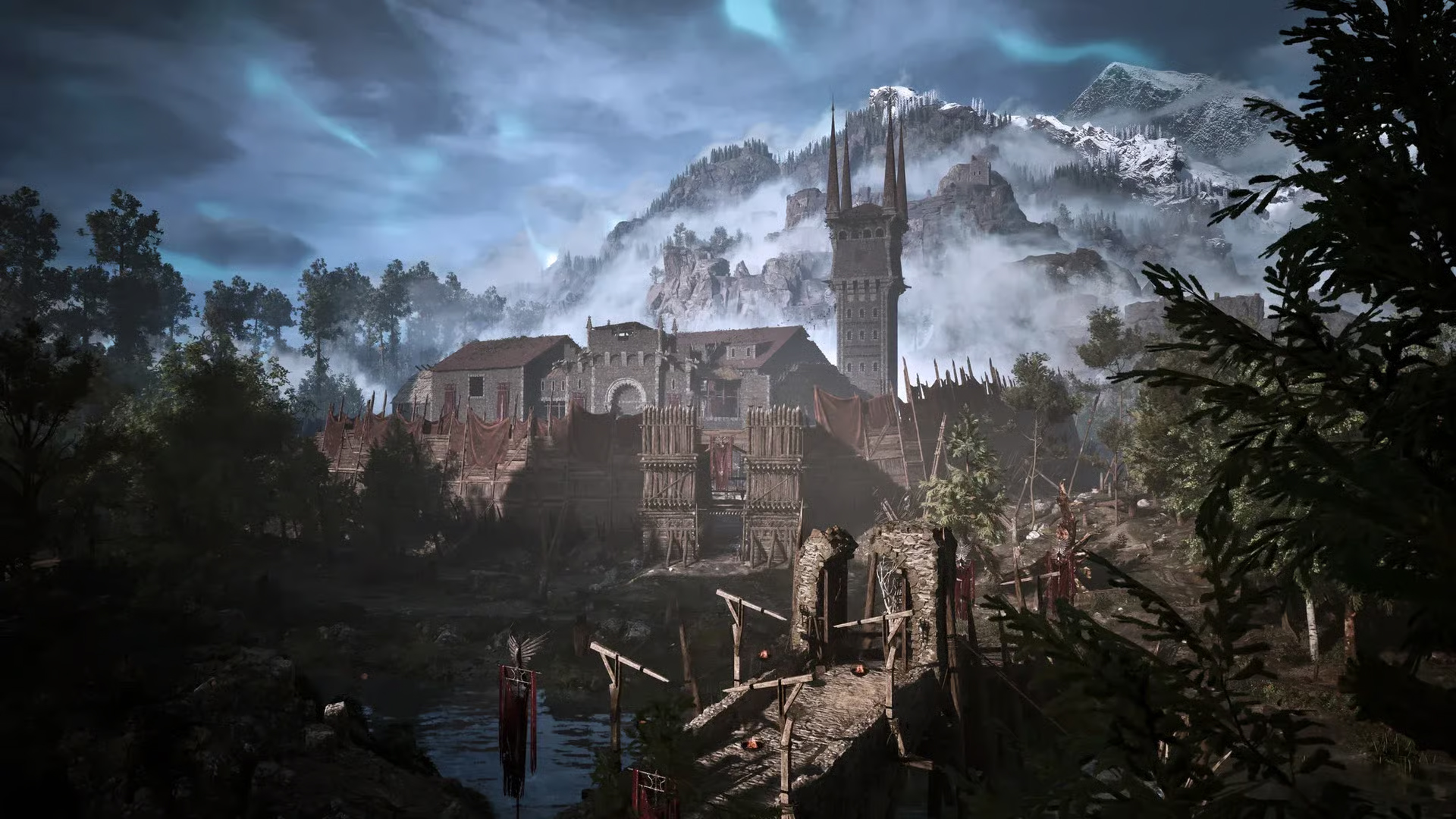
The Old Camp
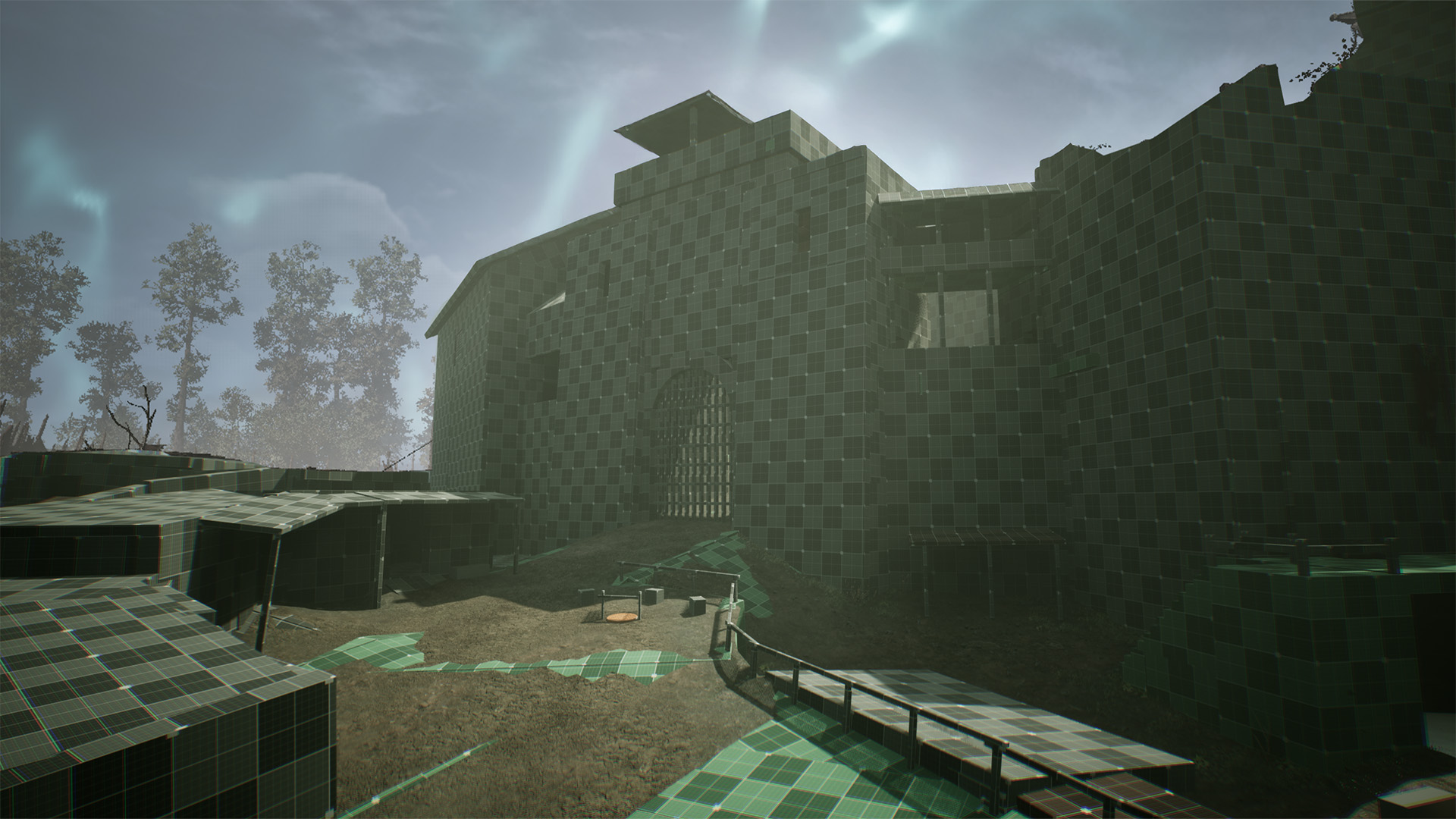
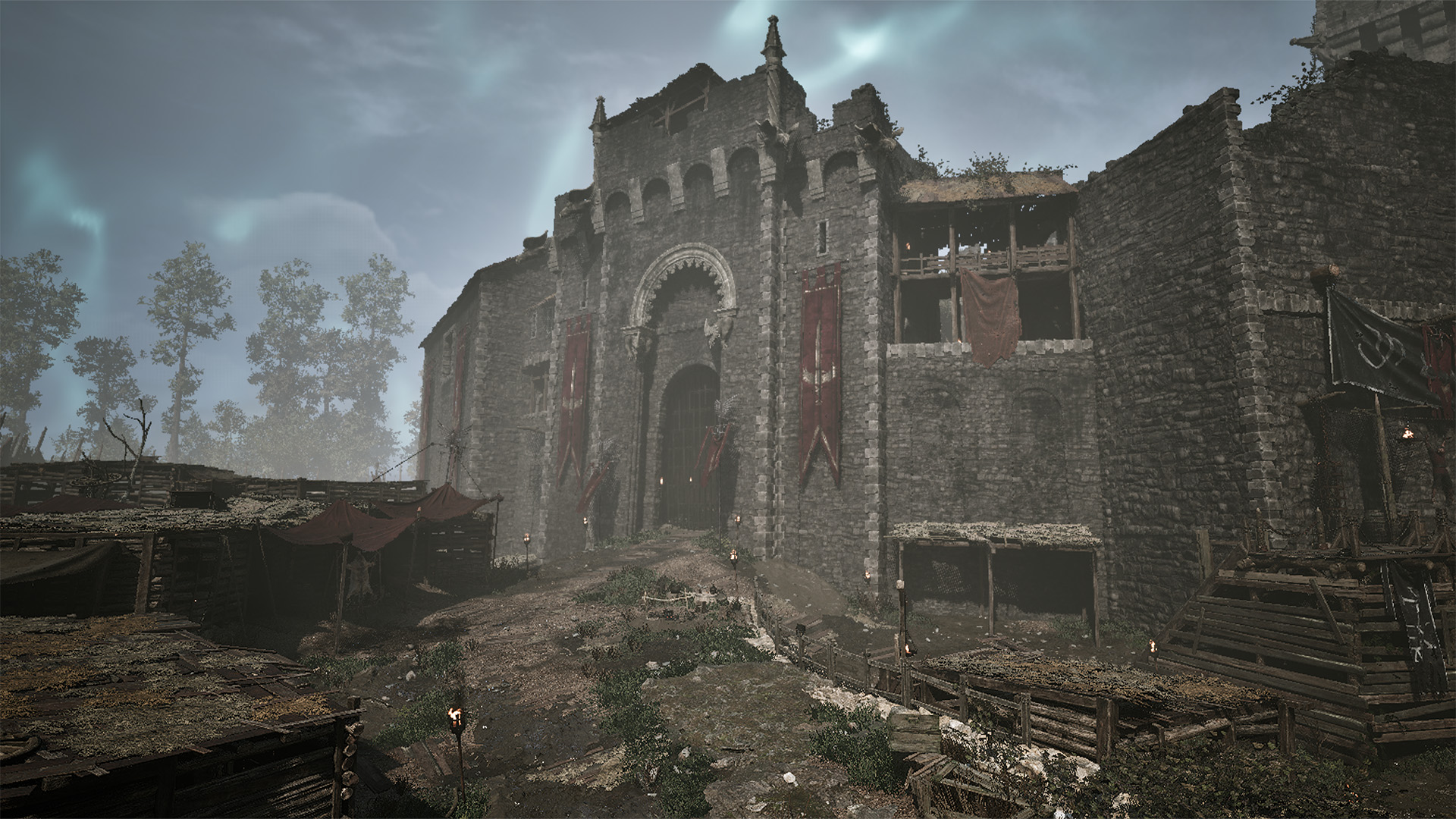
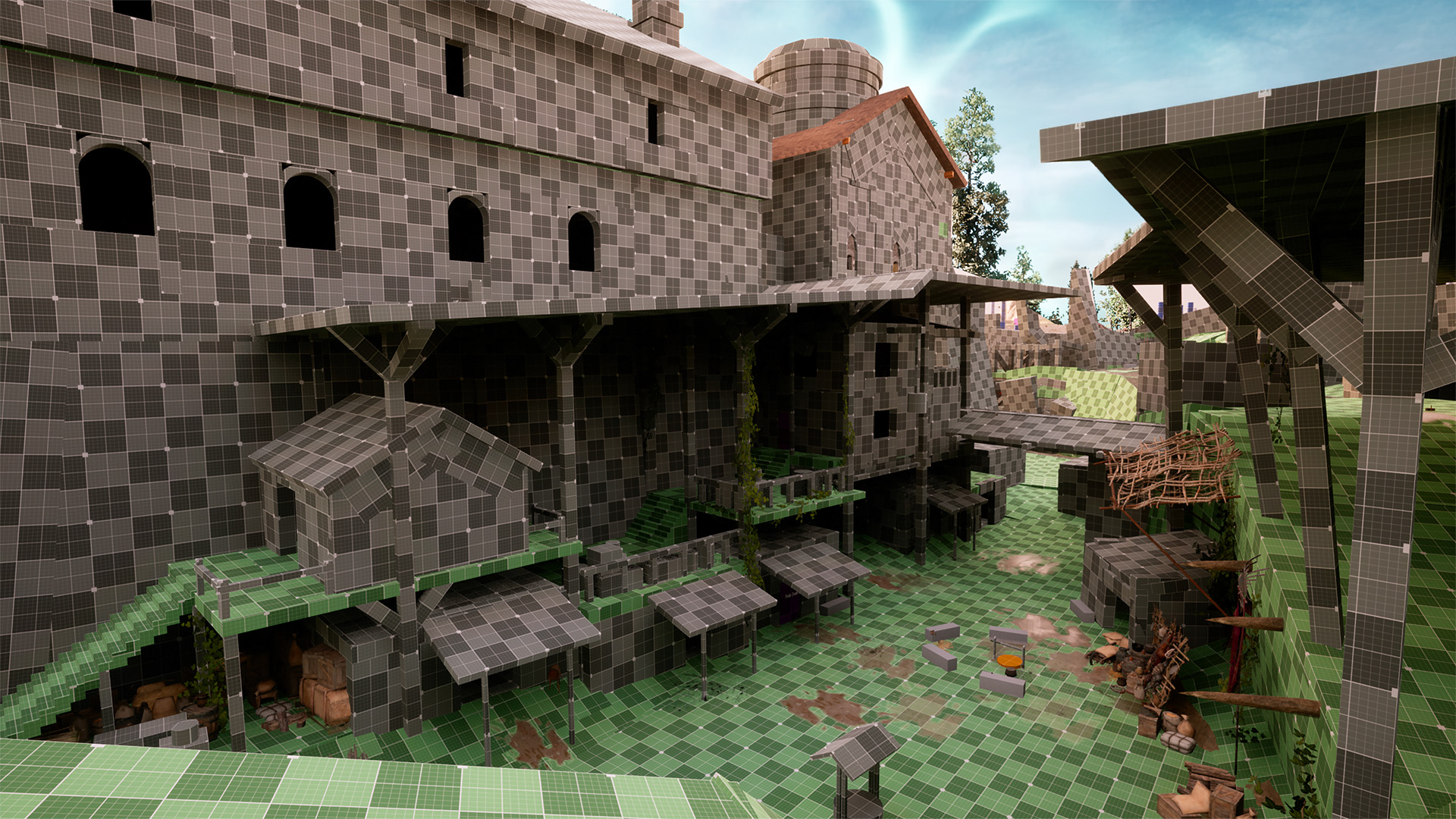
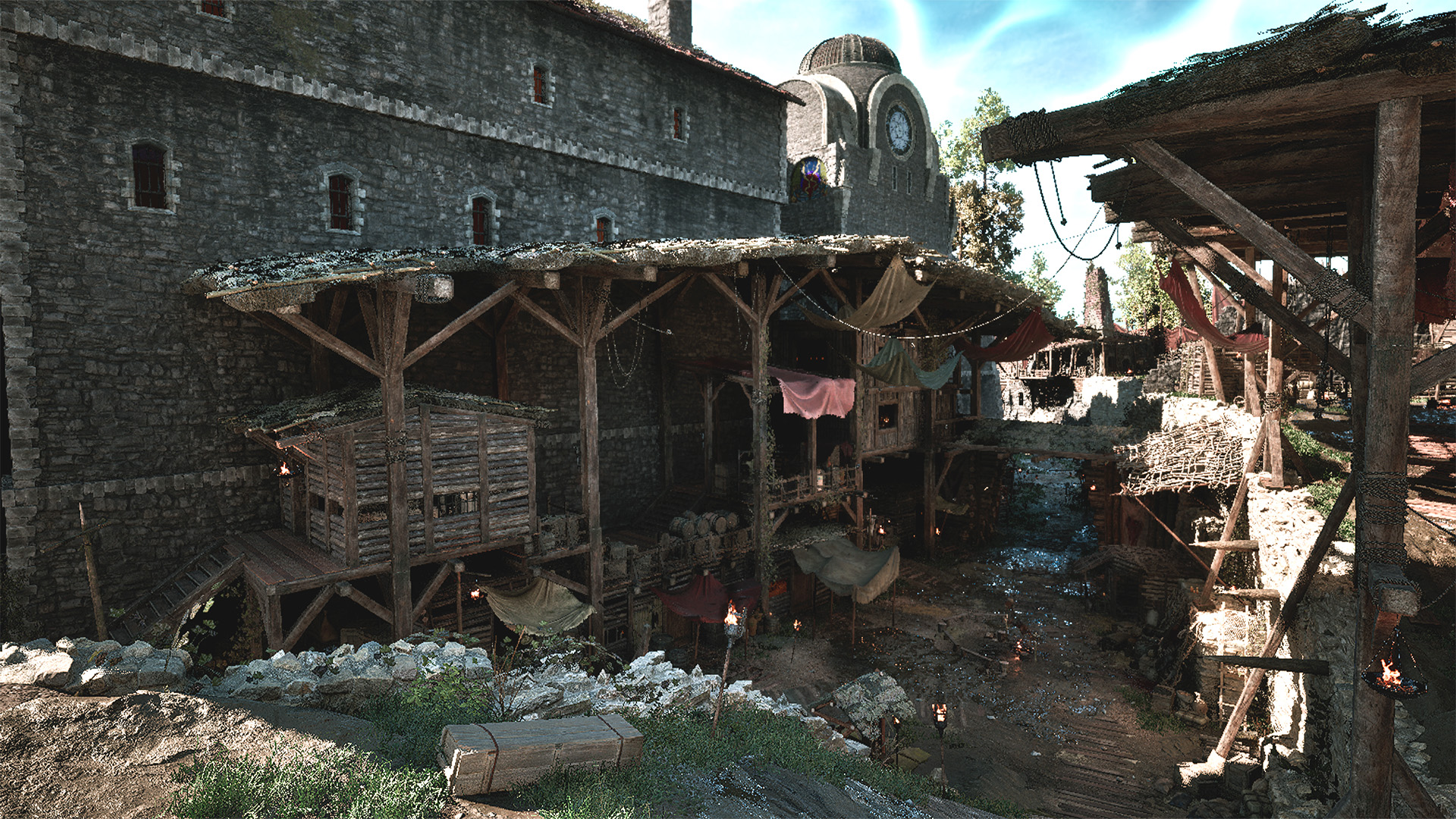
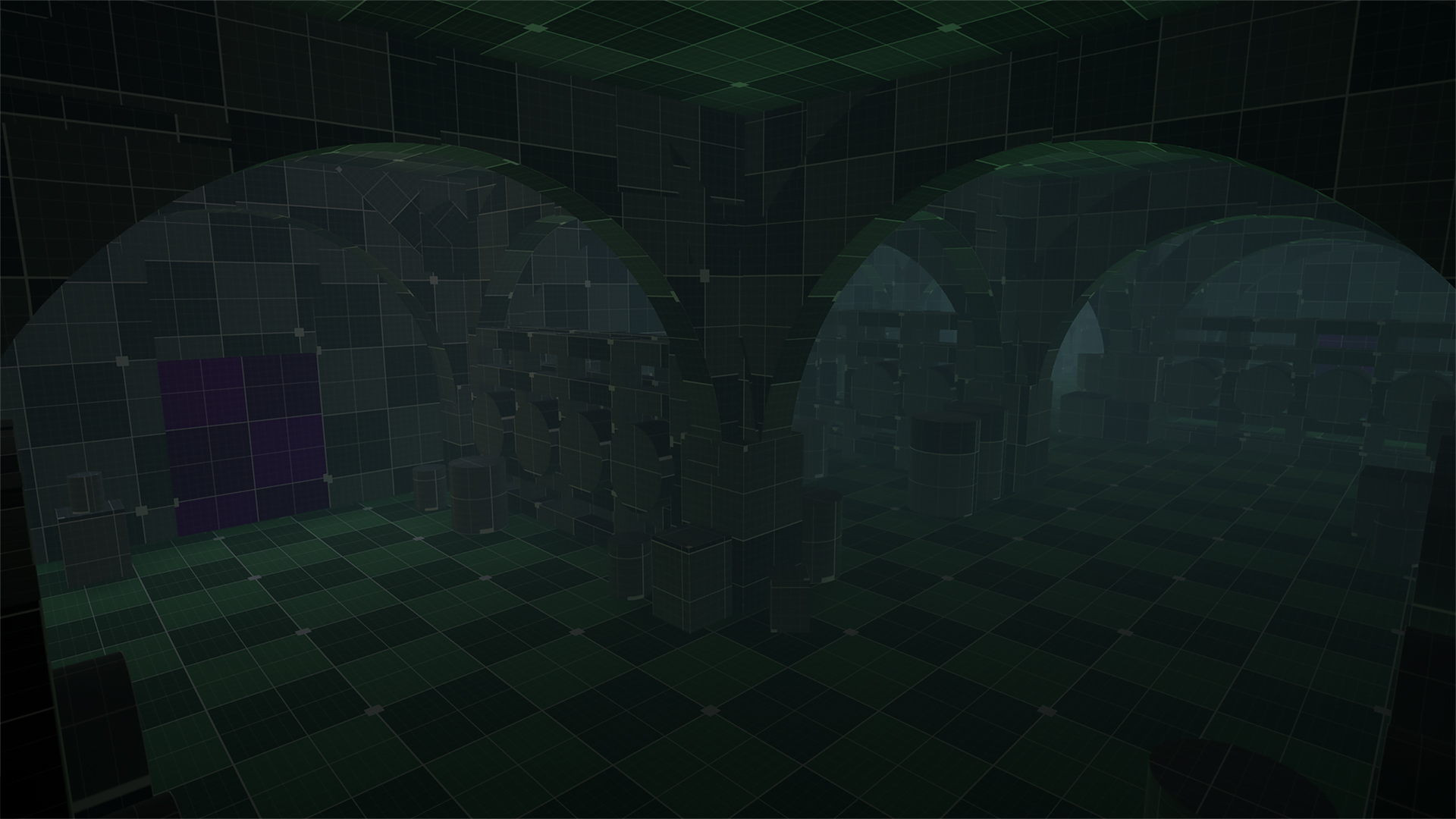
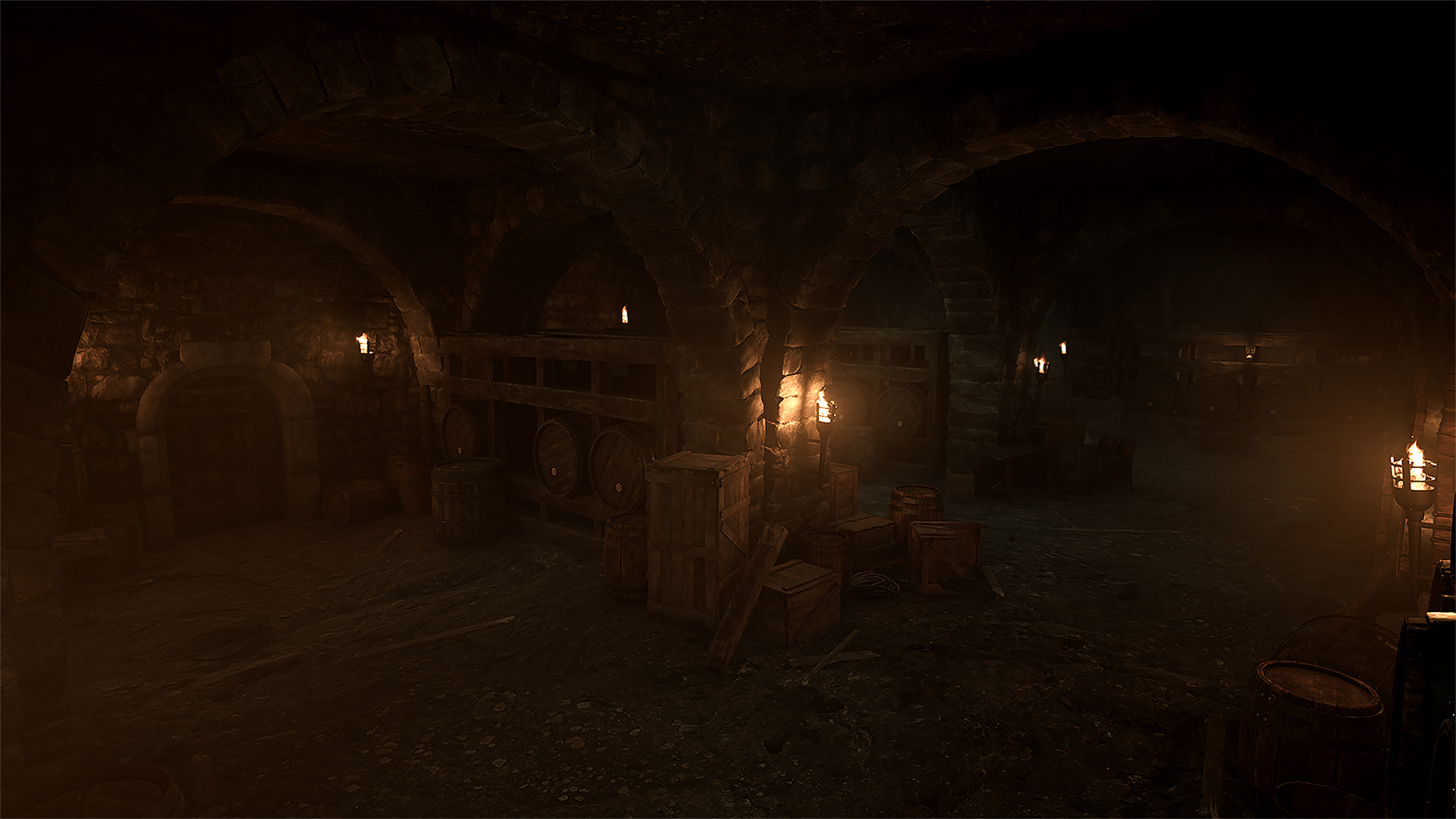
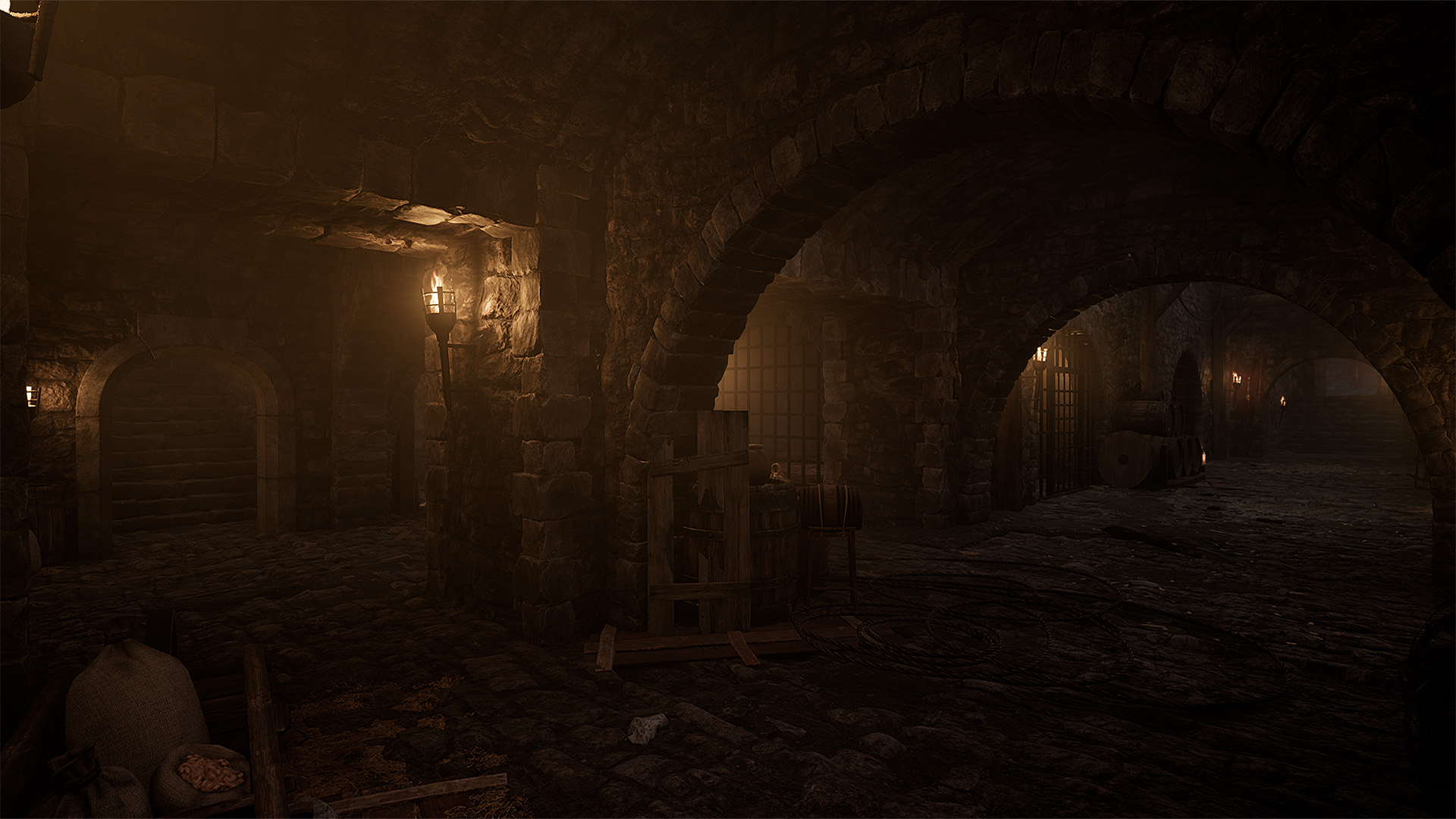
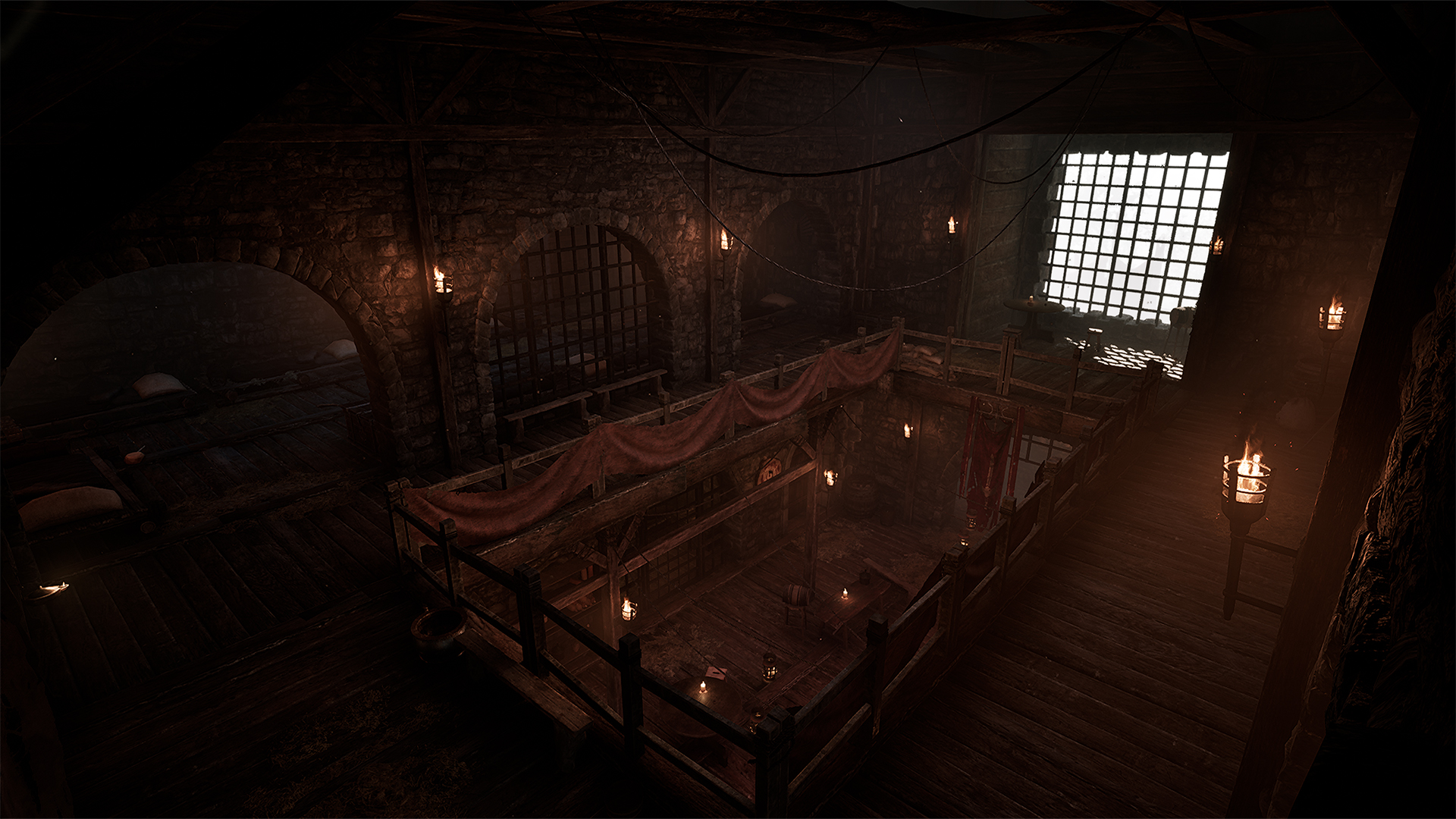
The Old Camp is the game's primary social and political hub — the first major space the player is guided toward, and the most layered in terms of faction hierarchy, access gating and environmental storytelling. My work covered the full zone from the outer circle through to the castle interior, underground areas and dungeon.
- — Designed the outer circle layout around four distinct functional areas — north entry, arena, smithy and merchants — each with its own landmark logic and NPC congregation points to make the space legible without a minimap.
- — Structured the castle as a verticality system: outer yard → first floor → second floor → big tower, with access gated by social progression rather than keys alone, so the space itself communicated the player's status within the faction.
- — Designed and documented the zone's puzzle systems: a hidden lever in the merchant's backroom revealing a secret passage to Gomez's wine cellar, a torch-lever secret in the fallen tower with an alternative meatbug-hole bypass, and a second torch-lever puzzle accessing a hidden torture room in the dungeons.
- — Produced full LD documentation covering subzone layouts, item placement across 62+ huts, environmental mechanics (melee, magic, climbing) and obstacle design for all vertical and underground spaces.
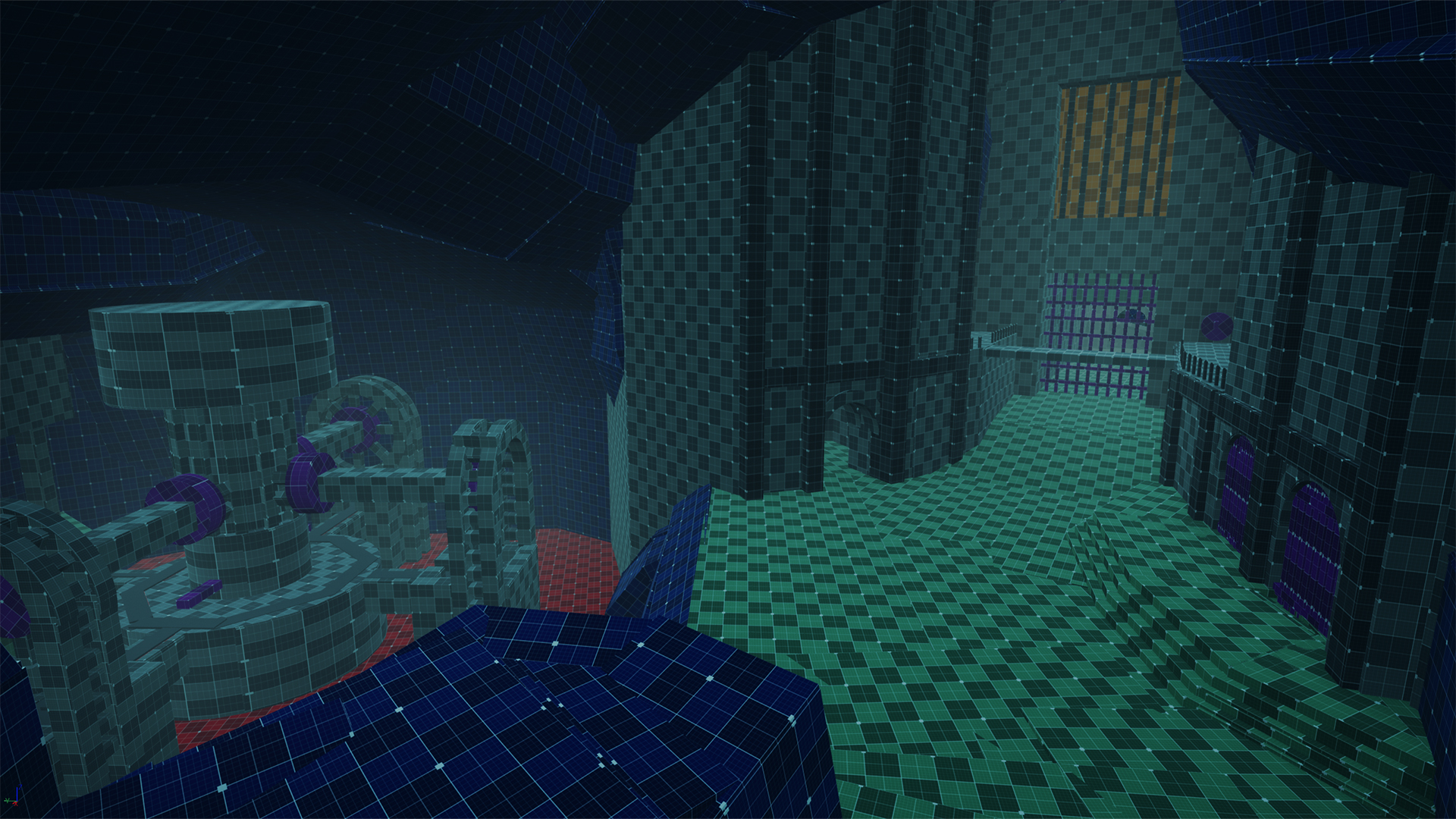
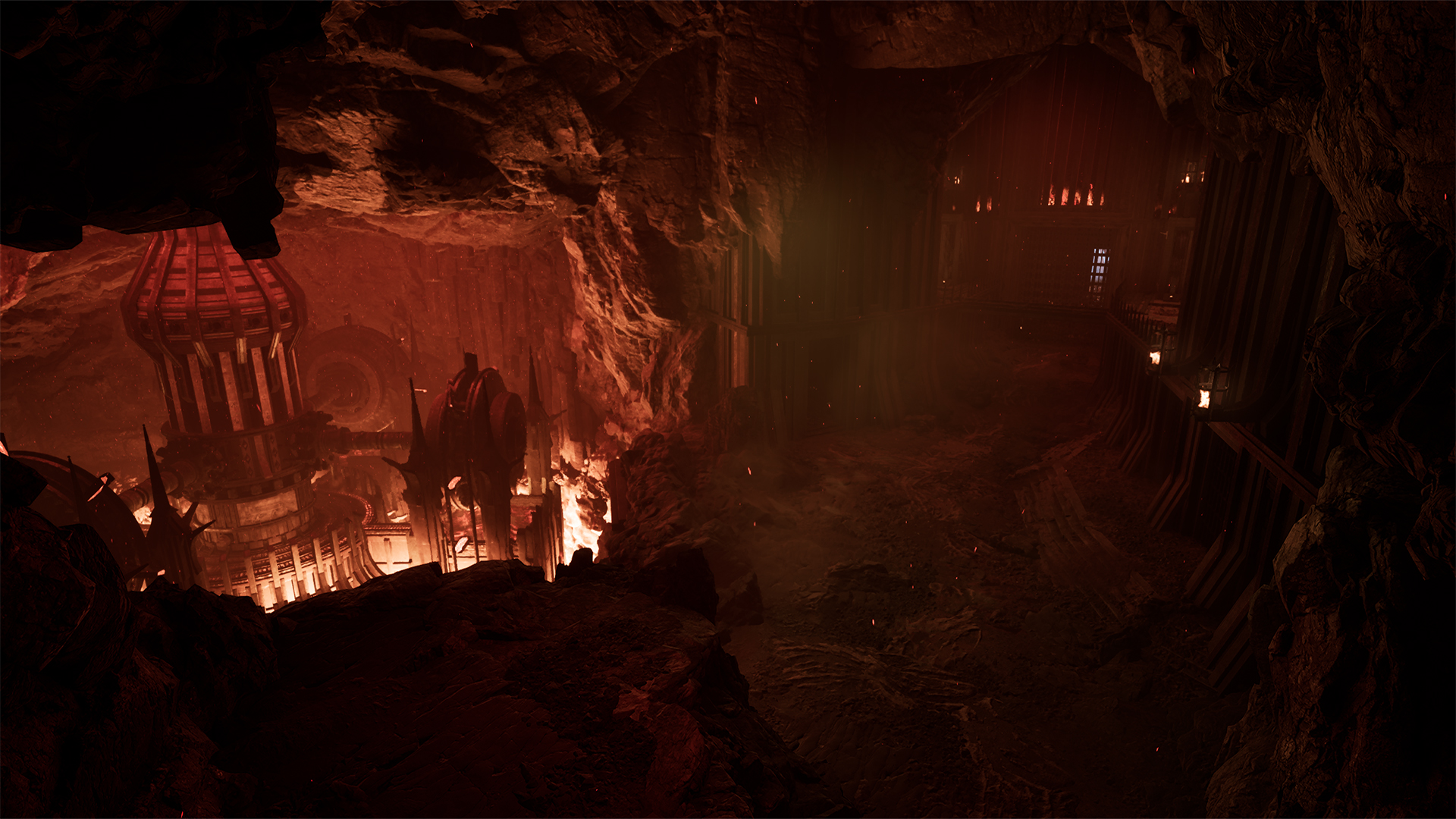
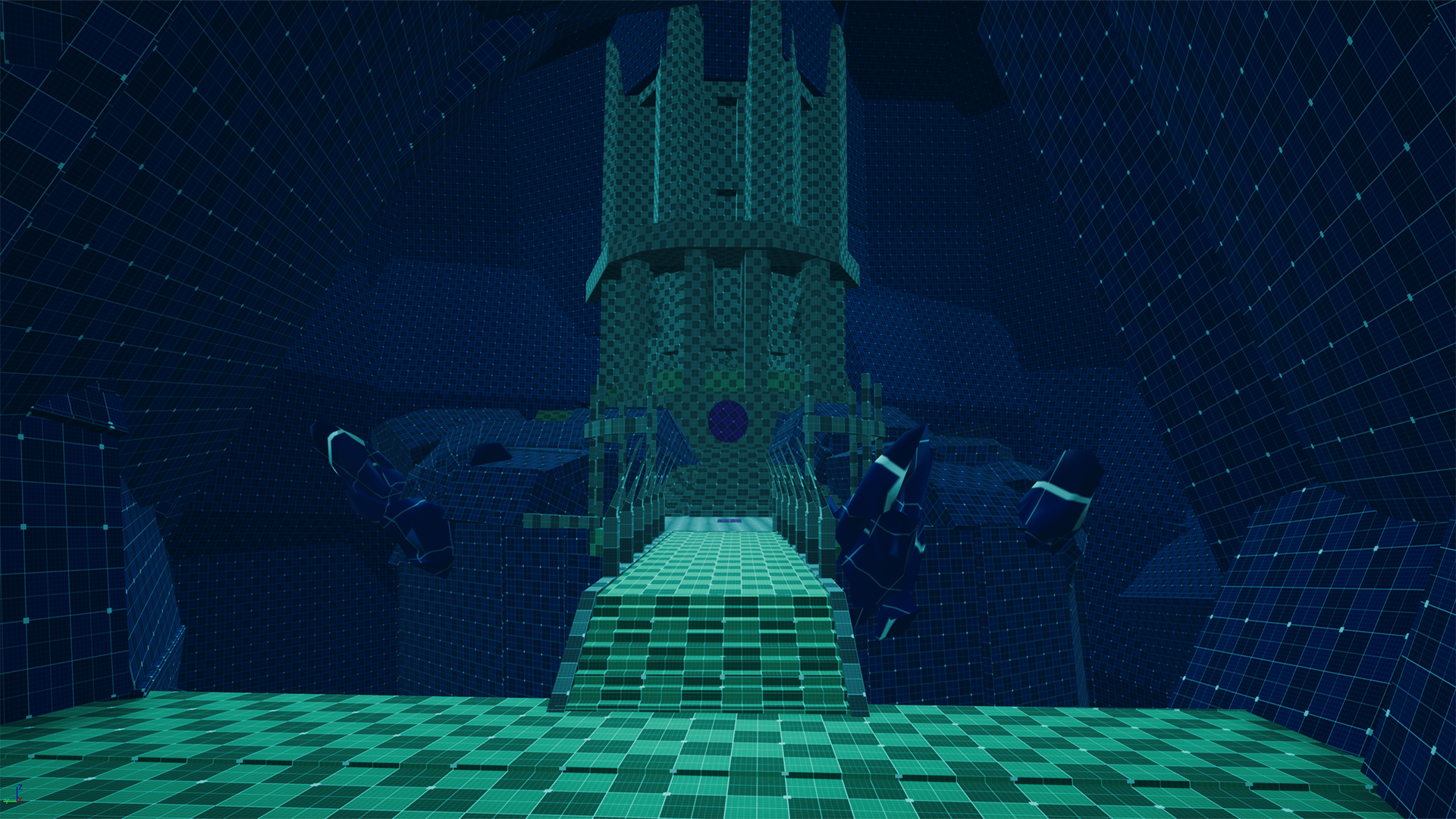
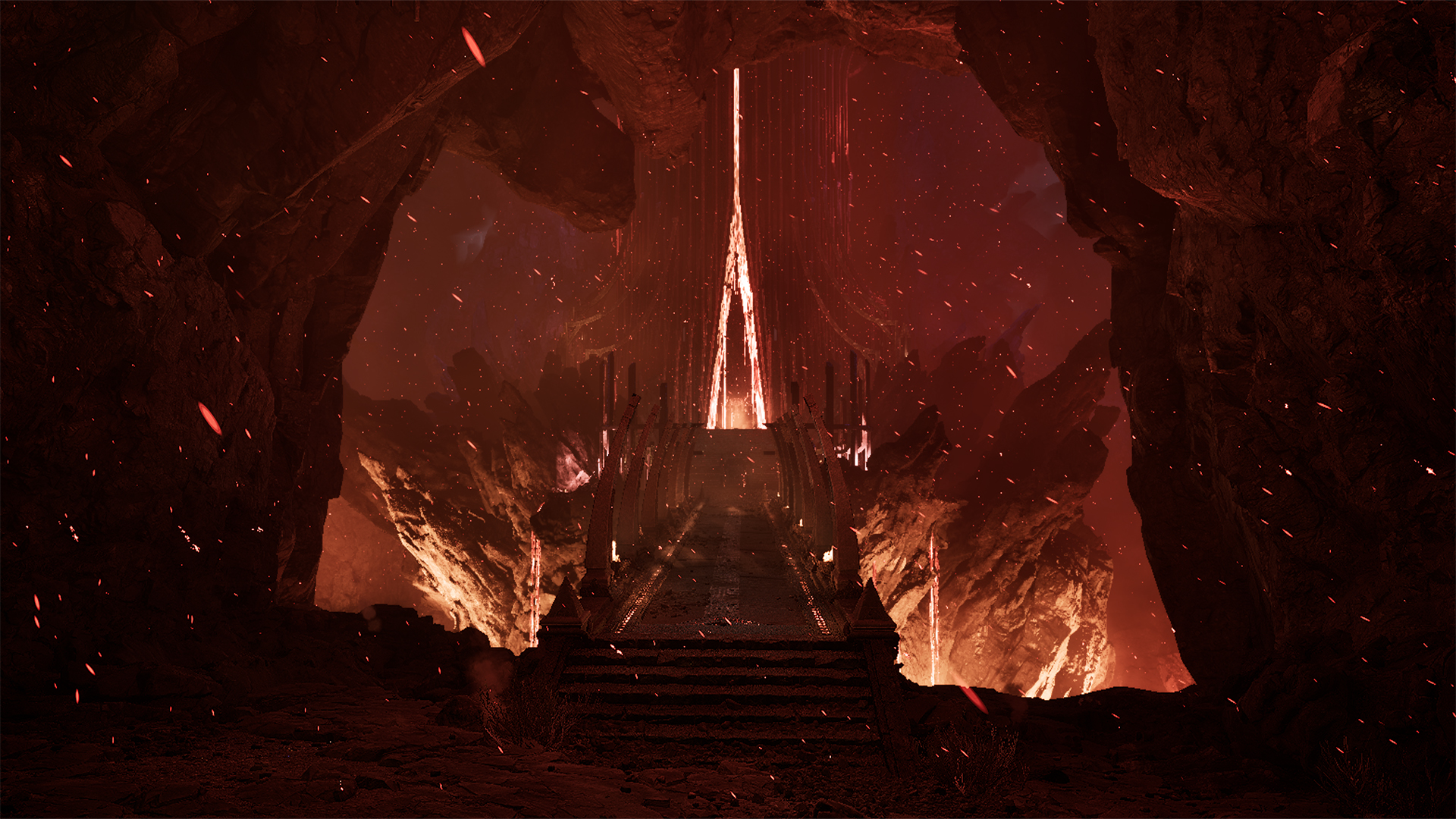
The Sleeper's Temple
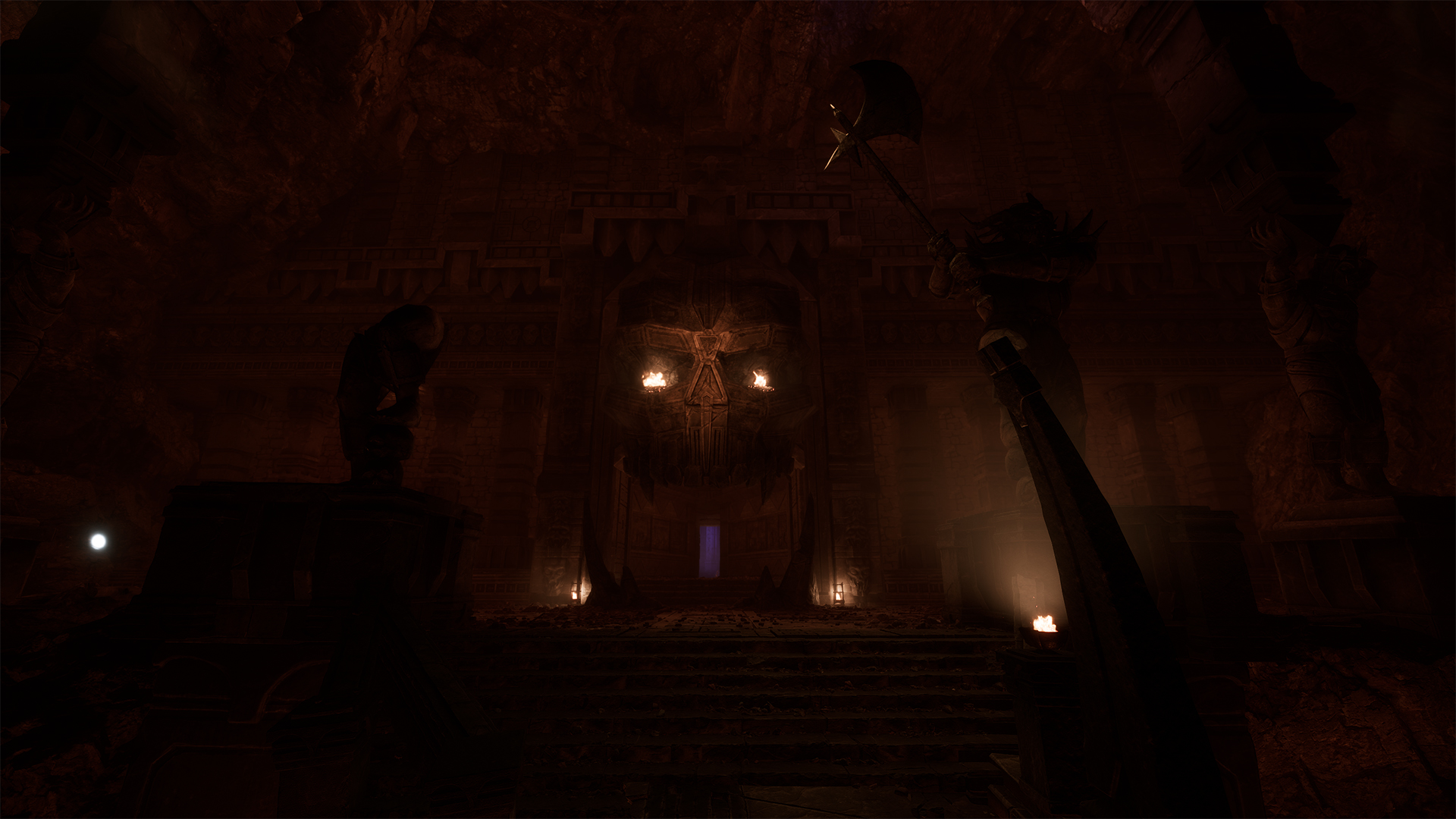
The Sleeper's Temple is the game's climactic underground dungeon, spanning four interconnected subzones beneath the Orc town. The Remake expands on the original with new spatial layers, environmental mechanics and a wider variety of puzzle systems.
- — Redesigned the full zone layout across four subzones, introducing a Minecrawler tunnel network as an alternative traversal layer and a Stronghold interior section as the final beat before the Sleeper's chamber.
- — Designed the full puzzle system for the Remake: symbol-based cryptext and statue rotation puzzles, a pattern-matching arena in the Varrag Kasorg chamber, a fluid-routing Blood Canal mechanic gating the third subzone, and environmental traversal puzzles tied to the Torture Pillars and Lava Extractor.
- — Produced full LD documentation covering all four subzones — layouts, 30+ landmarks and POIs, enemy distribution, puzzle breakdowns and dual item placement layouts (with and without tunnel system).
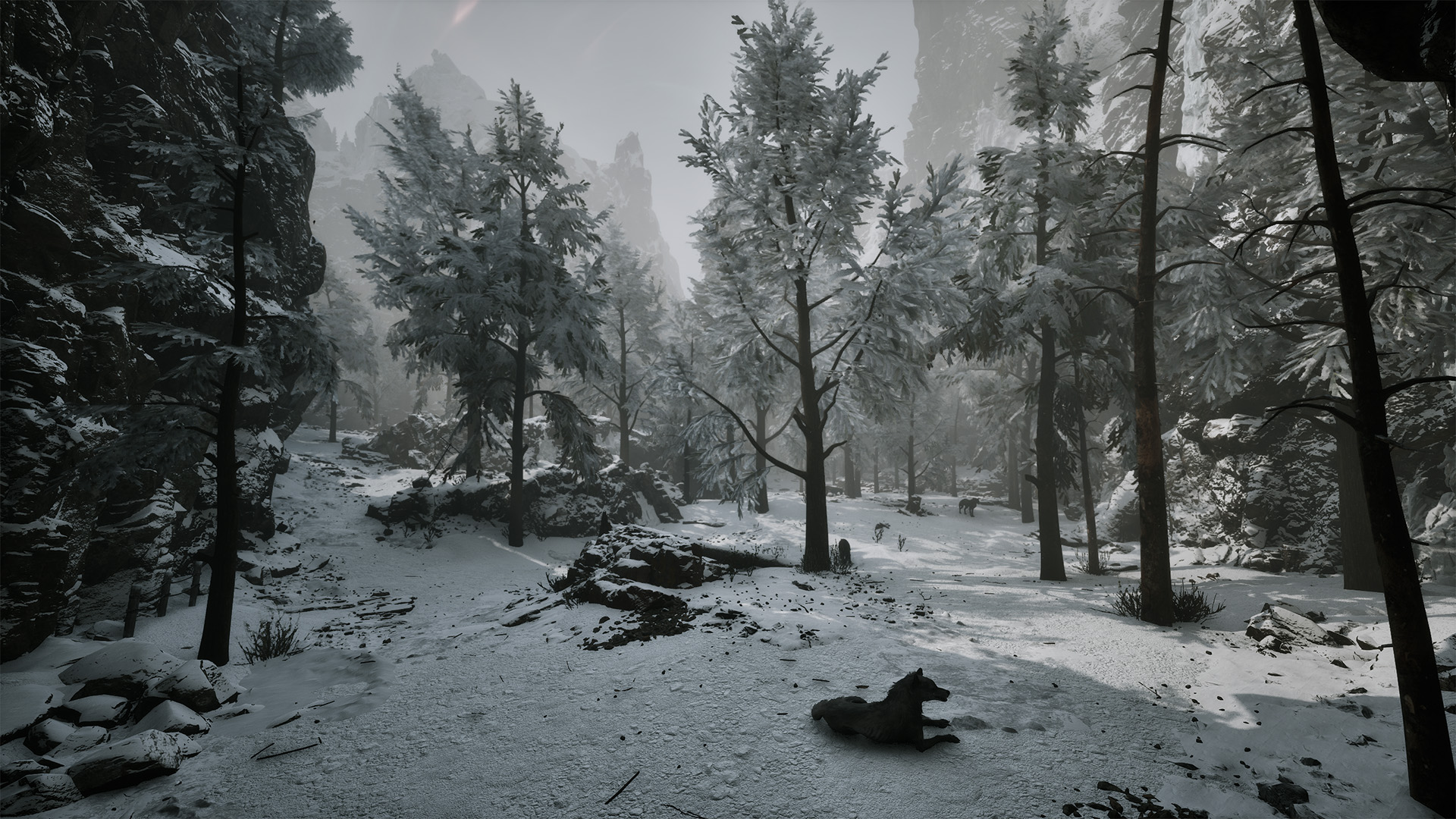
Open World & Transition Areas
The Tundra, Fisherman's Lake, and the Monastery represent interconnected landmark expansions designed to enrich the original world's layout and reward organic navigation.
- — Expanded the northern territory by introducing the Tundra section, a seamless vertical layer featuring a climbable mountain path, an open frosted wooded area anchored by a central waterfall, and a hidden shrine tucked behind the falls, meticulously paced to reward curiosity without hand-holding.
- — Shaped the Fisherman's Lake and the Monastery grounds as connective spaces — using terrain silhouette, water placement and sightlines to give each area its own identity while keeping it legible as a transition rather than a destination.
- — Worked primarily through UE Landscape tooling and organic mesh placement for these areas — a different blockout language to the architectural zones, focused on silhouette, pacing and natural sightlines rather than hard geometry.